
To secure a dupatta over a low bun, first let the fabric rest across your head and shoulders with enough slack to turn. Keep the bun comfortably pinned on its own. Use a closed garment pin at a suitable shoulder seam when the drape needs support there. If a light border still slips, a helper can place a smooth hair grip where it catches the folded edge and a comfortable section of hair. A heavy embroidered border needs support from the outfit, not a tighter bun.
It helps to separate two jobs. The bun has to stay comfortable and keep your hair gathered. The drape has to sit in the right place without pulling on the bun every time you look down. If you try to solve both with one pin, you’ll have a harder time working out which part keeps moving.
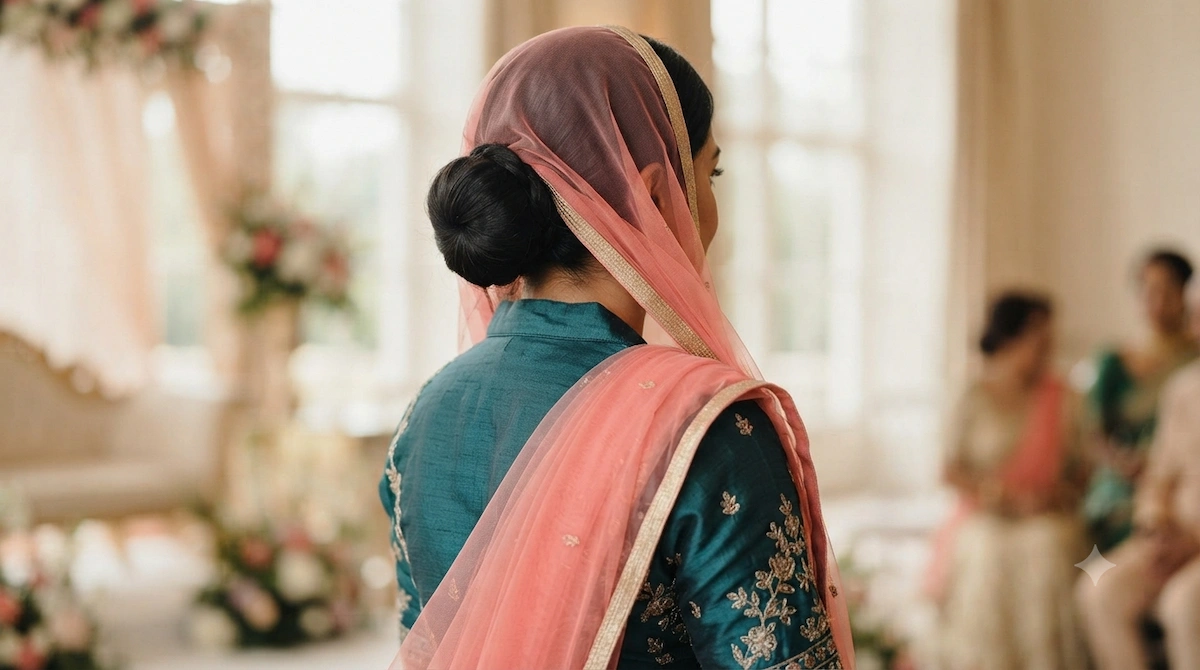
Choose the head drape before pinning anything
Put on the blouse, kurta or jacket and the earrings you’ll wear. Drape the cloth loosely, with no pins, in front of a mirror. Check where you want the front border to sit, where the ends fall and whether a thick collar touches the bun. Keep the amount of coverage suited to the event. If you are unsure, ask your host or the venue what guests are expected to wear.
Now take the weight of the longer end in one hand and see what happens to the border at your forehead. If it moves into place when you lift that end, the hair is unlikely to be the main problem. The cloth was pulling in one direction. Start by redistributing its weight. If the border stays steady but the bun shifts underneath, adjust the bun before deciding how to anchor the cloth.
What to use for the fabric you have
| What you’re wearing | Where to start | What to avoid |
|---|---|---|
| Light cotton or textured dupatta | Set the middle over the head and balance both ends. Try it without a hair grip first. | Pulling the border tight just to flatten a fold. |
| Light, slippery dupatta | Arrange a soft shoulder fold. If a light edge still shifts, ask a helper to try a smooth grip in a sturdy hidden part of the fold. | Clamping a delicate thread or adding several grips where one already pulls. |
| Dupatta with a heavy beaded border | Rest the length on your shoulders or forearm. If it still drags at the head, choose a lighter head covering or ask a draper to help. | Expect a single grip or the low bun to carry the weight. |
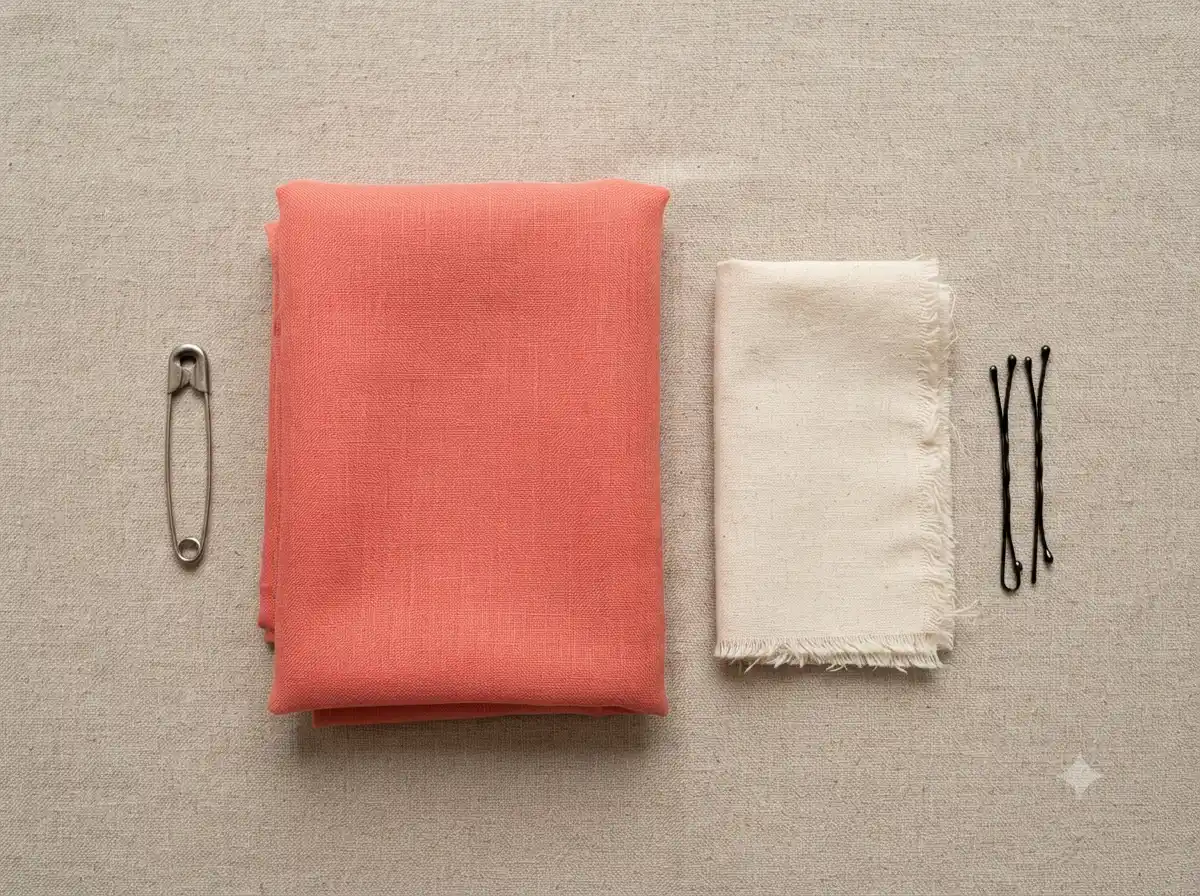
Have a few smooth hair grips, a soft elastic and a mirror ready. For a garment anchor, choose a closed clothing fastener that suits the fabric. Ask a helper to check a hidden fold before pinning delicate silk, net or embroidery. If the point might snag or pierce skin, reposition or skip it. Hair grips and garment pins have different jobs. For the bun itself, see our guide to traditional Juda pins and hair grips.
How to set a dupatta over a low bun
Make a flat, comfortable base
Gather the hair low enough to keep the top of the head clear, but leave room above the back collar. Use a soft elastic and twist the tail loosely around it. Secure the coil with smooth grips that catch the bun and some of the hair beneath. Keep the grip ends tucked. Turn your head before adding fabric to make sure the hairline doesn’t pull. If your collar is high enough to touch the coil, try a flatter shape before you add the dupatta.
If you have thick or long hair, try two smaller wraps around the same base to spread out the bulk. Consider that your layers won’t gather without pulling; leave the short strands loose or wear a low pinned twist under the fabric. Try supporting the drape on the shoulders before adding hair hardware. The cloth can sit low even when you aren’t wearing a full bun underneath.
Set the border and leave room to move
Find the middle of the long edge as a starting mark. Lay it over the head and arrange the folds with a mirror or helper. If you want one side longer, let it rest where it will be supported before you decide that the border is even. Leave a relaxed curve between your head and shoulder rather than pulling that stretch straight. Look down, look back up, and turn toward each shoulder.
For a head covering you expect to adjust during the event, make a small fold you can lift easily. If you lose coverage when you turn, give the fabric more room at the shoulder or start the border slightly farther forward. Positioning is easier before any pins go in.
Support the fabric at the shoulder first
Take the draped end to the shoulder where it will rest. If a pin is useful and the garment allows it, bring a fold of the dupatta to a sturdy section near a shoulder seam. Have a helper lift both fabric layers clear of your skin. Pass the point of a small safety pin through those layers from the garment side, then latch it fully before letting the fabric fall back into place. India’s Beauty Therapist vocational textbook illustrates the shoulder anchor as part of a lehenga dupatta drape.
Before fastening the opposite side, check whether the first anchor gives you enough control. If lifting your arm still draws the cloth tight against your head, loosen the fold or bring a little extra fabric through. A second anchor is useful only if it improves the drape without restricting movement. You can also rest some length on an arm rather than pinning both sides.
Use a light hair grip only if the edge still slides
With the weight already supported, ask someone to hold the front edge at the chosen spot. If the fabric tolerates a grip, the helper can slide a smooth grip along a sturdy hidden fold into a comfortable section of hair underneath. Keep it parallel to the hair and away from the scalp. Test the light alignment hold before adding another grip. Stop if it pinches, catches a thread, or pulls hair when you turn. Keep pointed garment pins on the cloth and garment, away from the head.
If a grip keeps slipping because it can’t catch the fabric and hair without strain, take it out. Try a less slippery head covering, a lighter border, or a shoulder-supported drape. A short ceremony may only need a drape you can hold or adjust by hand. For a long ceremony and heavy embellishment, get help arranging it before you leave.
Fix the problem you can see
| What happens | Check first | Try this |
|---|---|---|
| The front edge slips back when you look down | The heavy end behind your neck | Support it at the shoulder or arm. Set the front edge again with slack. |
| One side drops below your ear | Uneven weight or a twisted fold | Open the fold, centre it again and have your helper look from the front. |
| The bun presses against your collar | Bun position without the dupatta | Move the coil slightly higher or flatten it. Re-drape before closing garment pins. |
| The cloth catches your earring | Where the border crosses the ear | Move the fabric fold slightly and retest. If needed, wear a smaller earring. |
| A pin digs in, or the hairstyle feels sore | Where the weight is pulling | Undo the fastener and reset the drape or use less weight on the hair. |
The American Academy of Dermatology recommends looser hairstyles, particularly when hair is pulled back under a covering. A drape that is already uncomfortable in the mirror is worth adjusting before you head out.
Check the seated position and take it off in order
Sit against a chair back, look down, and turn both ways. Raise each arm and take the shawl off once if you’ll remove it during the evening. If the front edge moves after an ordinary head turn, return to the shoulder fold and check its slack. If the bun is bumping the chair, shorten the projection by rewrapping it instead of trying to pad it with fabric.
Take the dupatta off before you undo the bun. Ask your helper to support the heavier end. Remove any hair grip that joins cloth and hair, then release the garment anchor while the cloth is held. Lift the drape free and take out the bun grips separately. If you feel it catch, stop and follow the snag with your hand before pulling. Carry a spare soft tie and the smallest suitable fastener for a simple reset at the venue.
If you will be putting the dupatta on and taking it off
Decide beforehand which layers will stay during the journey and which you will add at the ceremony. If you cover your head for one part of the event, try setting the dupatta with the length supported on a shoulder and without a head grip. Ask a helper to practise placing the front fold once, so neither of you has to feel for a pin under layers of fabric later.
When you take a coat off, hold the ends of the drape in front of you or pass them to your helper. Then remove one coat sleeve at a time. Reset the fabric from the shoulder before you smooth the border over the bun. Changing the outer layer is usually easier when its fastening points are separate from the scarf.