
If your hair stands up after you take off a winter scarf, unwrap the scarf away from your hair. If a little moisture suits your style, make one light pass over the flyaways with clean, barely damp palms. Stop if the pass disrupts your waves or curls. If static keeps coming back, change how the scarf sits against your hair and try your usual conditioner on the next wash day.
The quickest fix starts with where you see the problem. Fine strands lifting at the crown need a different touch from a knot caught inside your coat. Take a moment to look before brushing or adding a product. You may only need to free the ends or change the way you remove your scarf.
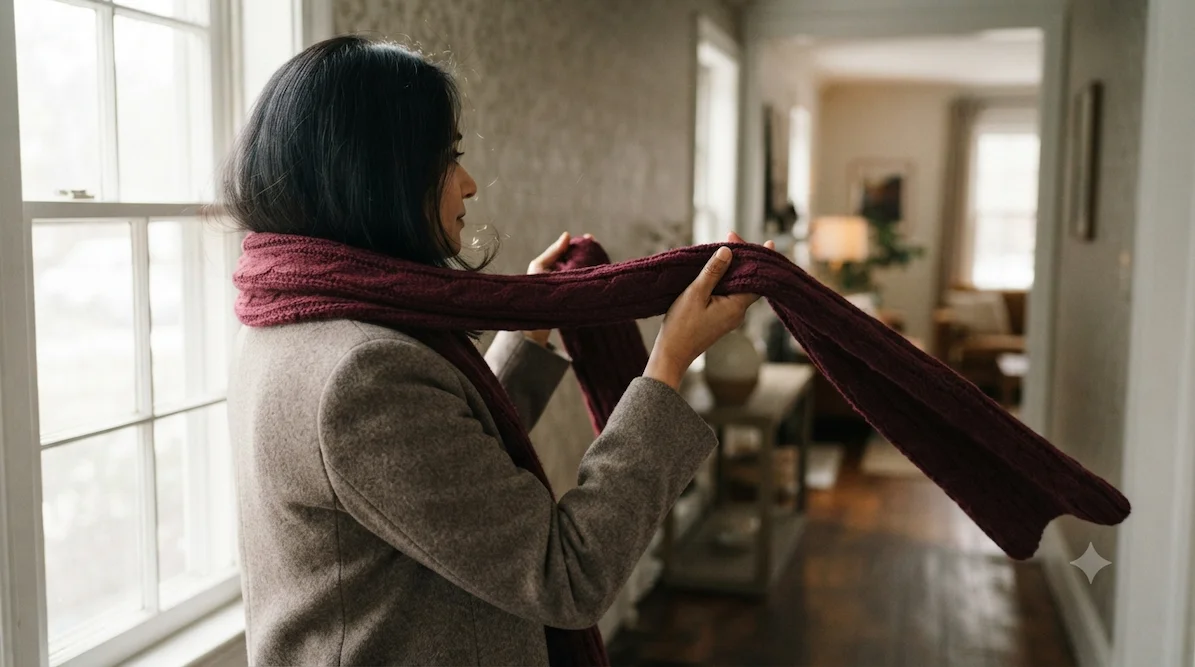
Is it static, a scarf dent, or a tangle?
Static often shows up at the moment the scarf comes away. Individual hairs may rise and spread apart or cling to the cloth. This is easier to notice in dry air. Hair and fabric can build up electrical charge when they contact and separate, and similarly charged strands can repel each other. A laboratory study of charging during rubbing on human hair examined charge buildup and dissipation on untreated, damaged, and conditioned samples.
A scarf dent is a flattened or bent patch where the fabric pressed. If the hair still looks folded after the wisps settle, extra smoothing product will probably make the patch look flatter. Lift the roots lightly with fingertips, or use the bend to change your part for the evening. If several strands are caught together and tugging behind your neck, treat that as a tangle. Hold the hair above the knot and ease apart the ends before using a comb.
Humidity-related frizz and static can both give you an uneven outline. Timing gives you a more useful clue than looks alone. If your hair was behaving the same way before you put the scarf on, pulling the scarf away differently may change very little. If it repeatedly lifts right as you remove the scarf, start with the fabric and the removal motion.
How to settle flyaways after taking off a scarf
- Free the hair first. If the ends are tucked inside a wrap, hold the fabric open and ease them out using your fingers. Unwind an open scarf sideways and away from your neck. Open a loop scarf wide before lifting it. A snug loop that catches on clips or earrings may be easier to remove after taking those accessories off.
- Press the loose strands into place. Dampen clean palms, then shake off the excess. Glide once in the direction your hair falls. Start at the ends or outer layer and see how it sits. For waves or curls, touch only the wisps you want to settle so you keep the rest of your texture.
- Add a hair product only if you need more control. If you already use a leave-in conditioner or smoothing cream comfortably, follow the label. Spread a small amount between your hands first. Use the residue on the lifted strands, keeping most of it away from the roots. Start with less than you think you need so there is room to adjust.
- Wait a moment before brushing again. If the hair has fallen into place, stop there. If the ends are tangled, work them loose gently, holding them above the snag. A brisk pass from the crown to the ends can make the tangles more noticeable and rub the same strands again.
If you are standing outside in the cold, keep the scarf on and sort your hair out inside. In a washroom mirror, check the back as well as the part. A few wisps at the temple may be the only thing you see from the front while the actual problem is a handful of hair caught between your scarf and your coat.
Put the scarf on with less hair in the fold
Stand in your coat before wrapping the scarf. Turn your head both ways and see where the collar meets your hair. That overlap is where strands can get trapped when you take your coat off. Pull long hair clear of the collar, then lay the scarf around your neck without using it to sweep your hair into place. Leave enough room to move your head normally.
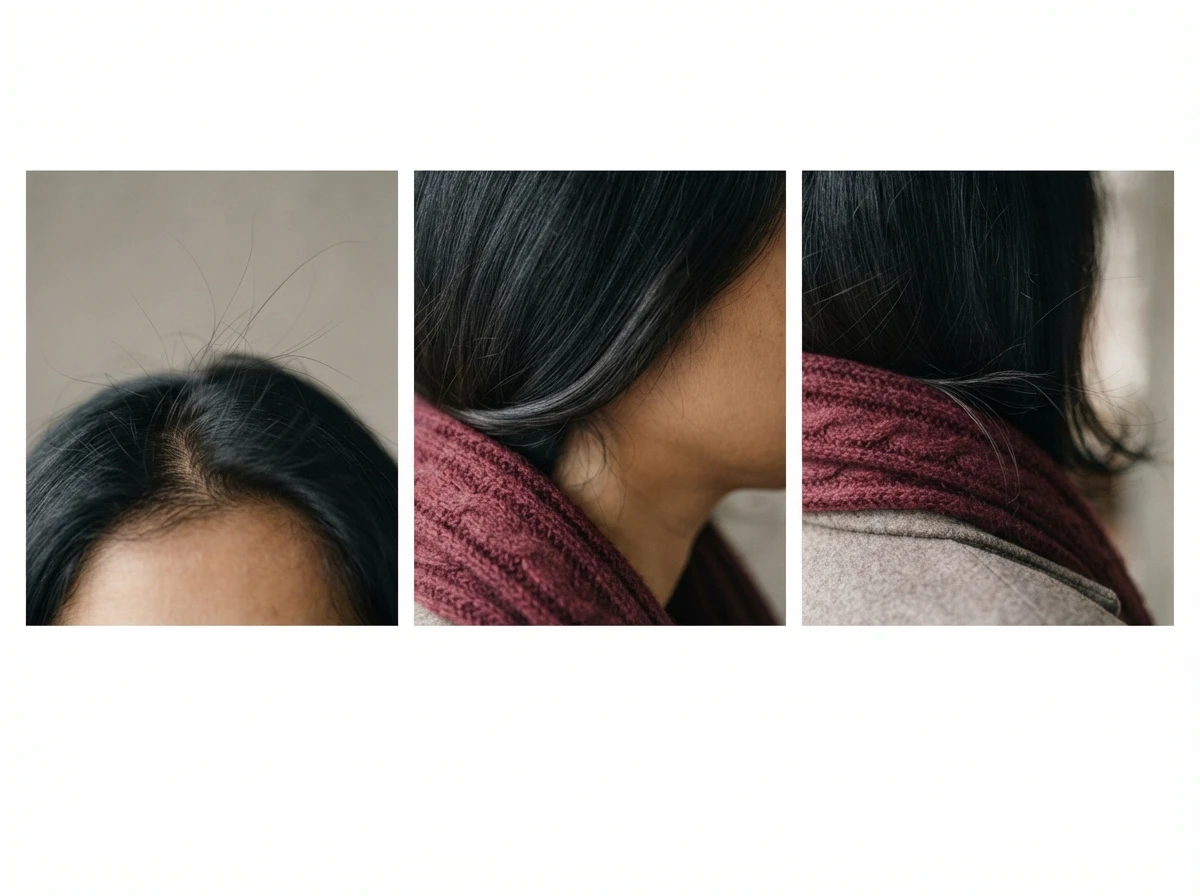 For hair above the shoulders, pin a small section away from a snag point only if it reaches without pulling. If a clip will sit inside the path of the scarf, move it farther forward or go without it. For longer hair, bring the lengths in front over one shoulder or try a loose braid that can sit outside the scarf. Choose a position that makes sense with your bag strap, since a strap resting on the same shoulder can catch the sections you just freed.
When warmth requires tucking the lengths under your coat, loosely gather them first, so they leave as one section. Walk indoors, open the scarf and collar, then release the hair. If you prefer a bun, check where the bun and pins sit before adding a thick collar. Our guide to Juda pins shows the different accessories you may already have at home.
Compare the surface of your scarves before buying anything
Try two scarves you already own. With the same hairstyle, wrap one as you normally would and take it off after a short spell indoors. Look at the hair where the cloth touched. Try the other under similar conditions. Pay attention to the fabric edge and the side that actually rubs your hair. Two scarves can feel different even when the fibre labels look similar.
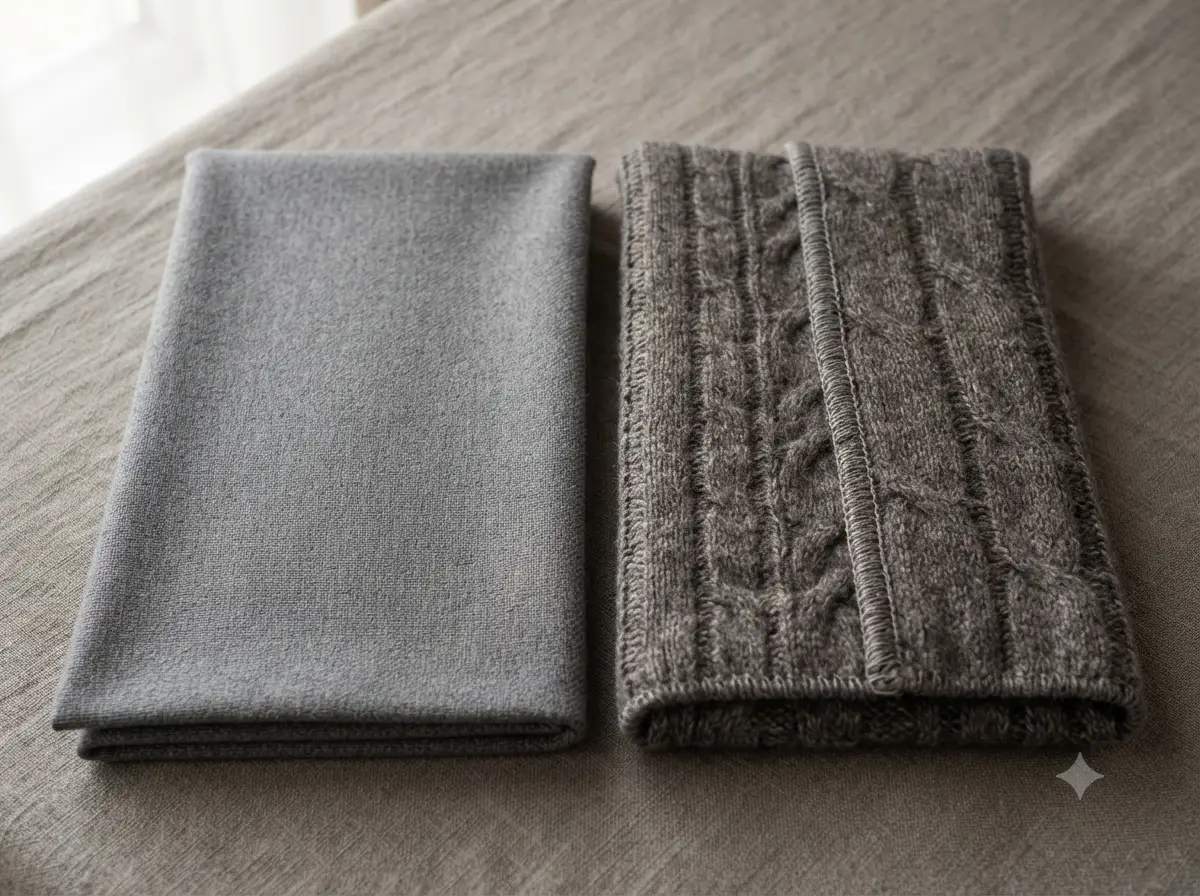
A flat, smooth inner surface can help hair slip past without catching. A rough seam, fuzzy edge, or open knit can snag a loose strand. A smoother scarf or a lining you already own is worth trying when your hair gets caught there. Treat this as a comparison of your own layers. The way a scarf drapes, how tightly you wrap it, and the conditions that day all influence what you see.
If your warmest scarf has a surface that catches, try folding the smoothest face inward so it rests against your hair. Compare the two positions while wearing the same coat. If it is actually the coat collar creating the snag, moving the hair in front can do more than changing the scarf. Test one adjustment at a time so you know which setup you prefer.
Choose the smallest adjustment that fits your hair
| What happens after unwrapping | What to try first |
|---|---|
| Fine, straight strands fan out, and the roots flatten easily. | Try damp palms first. If you add leave-in, use only the residue on the outer lengths. |
| Waves stick up at the temples while the rest hold their shape. | Pat the affected spots and give the waves time to resettle before combing. |
| Curls or coils catch along a rough edge. | Open the scarf away from your hair. Free the affected curl group gently and change which fabric surface faces inward. |
| Long hair bunches beneath the collar. | Keep the ends outside the fold, or carry them together in a loose braid for the trip. |
| A heavy clip gets caught on the way off. | Move the clip away from the path of the fabric or style it once indoors. |
Use the row that fits the problem you can actually see. Fine hair can be curly. Thick hair can still have flyaways at the part. If you have a mixture of textures or lengths, fix the affected section rather than coating the whole head with a product that only one patch needs.
Make the next wash day easier
Use a conditioner you already like and follow the instructions for where to apply it and whether to rinse. A study of common conditioning ingredients describes how positively charged ingredients interact with hair surfaces. They can help reduce or neutralize residual charge on hair. How any given conditioner will feel or perform under your favourite scarf also depends on the formula and your hair.
The American Academy of Dermatology’s healthy hair advice recommends using conditioner and adjusting its placement to hair type. If your hair gets weighed down, start with the ends when the label permits. If you already like the way your routine feels, try changing one step at a time before adding a new oil, mask, and styling spray together.
Leave household dryer sheets and fabric sprays in the laundry cupboard. For hair, stick with products intended for hair and use them as directed. If the way you secure your hair leaves the scalp sore or the hairline stretched, loosen or remove the style and let the scarf sit loosely.
Keep a simple reset for the next commute
Before leaving, clear the collar, wrap the scarf comfortably, and make sure you can undo it without dragging it across the crown. When you get inside, unwrap, smooth only where needed, and check the nape for trapped ends. If the same scarf keeps causing trouble, note where it touched and change that part of the wrap the next day. You can keep the warm layer and make the hair fix much smaller.